What is Rens Swart going to do in the Saint Cornelius basilica in Welberg, The Netherlands?


Overview of this page
Introduction25 May & 8 June 2020 Why would one like to have a church?! Why would Rens Swart like to own the Cornelius church? And what is he going to do in the Saint Cornelius Basilica, as he prefers to call it? I have split my story into two: on this page I will describe what I am going to do in the Cornelius basilica, but I have devoted a separate page to how my lifelong fascination for churches and the need for a warehouse culminated in the buy of the Cornelius church. The story of my lifelong fascination for churches, dreaming of living in one, and how the need for a warehouse led to the acquisition of the Cornelius church On this page, I will describe what I plan to do in the church. I will describe it as a sort of user requirements and I will conclude what these will look like in the Saint-Cornelius Basilica. I will start with requirements on cars, as they are the most prominent destination for my current warehouse and I was looking for a replacement space. Then I will discuss organs and organ building, as they were added later. And finally I will discuss why a monumental church for me is the perfect and straightforward solution to my space requirements: because religious nineteenth-century architecture is in fact is my oldest fascination and I have worked hard for years to study and conserve that architecture. I will combine my use of the building for just working on organs and cars with caring for this beautiful example of 1920s religious brick architecture. (I love telling detailed stories. For a summary, see the section on the welcome page) When I considered acquiring the church, I sought for extensive consultation with the Diocese and the Municipality. You cannot use a building for another destination than is regulated in the officially established and published planning or destination documents. It comes as no surprise that the church had the destination 'societal use', which includes religious use. The previous buying candidate managed to extend the destination to residential, so that you can use the church as your house. Both Municipality and Diocese have a say in what can be done in this church. The Municipality because of the Zoning or Destination Plan, the Diocese because there is a clause in the buying and owner contract which lists quite a lot of activities that are forbidden and contains several other severe limitations and even heavy fines for violations. Both the Municipality and the Diocese appreciated my cooperative attitude and openness apparently very much. Cars: English 'youngtimers'When I was young, we travelled only by bicycle and train. It was just a cost-effective way and it sufficed for the travels primarily my father had to make as a daily commuter. Only when I was in my twenties and my parents about sixty, we all got a driver's license. A couple of years later I bought as my first car a Rover 3500 Vanden Plas (the whole story can be found elsewhere on this site! sorry, Dutch). When my wife and me had added another 240,000 km to the clock, I bought a Daimler Double Six. And after a couple of years another Rover SD1 and then after an accident a second Daimler. I started to work on my cars and bought others, because they were nice or cheap or they could serve as a cheap parts supplier. How I got to like some cars: the Rover 3500 Vanden Plas (SD1) (Dutch) The Jaguar XJ40 and my search for a Daimler Double Six My cars are not always the best and they are not all in driving condition, but I enjoy owning them. As always, I have more plans in my head and listed in my digital memory than I can possibly make come true in my life. I am aware of it and I am not getting nervous of it, well, most of the time. However, I have always considered that it will be most effective if my cars serve both my daily transport requirements and my enthusiasm. My cars have always been also my daily company cars. This sometimes gets me a little nervous, because I need one for my daily transport while at the same time it might be in need of (serious) work – or does not drive at all. Moreover, my cars have always served as a kind of a business card to illustrate the broad skills of their owner. After some years of working on cars on the street near my house, I started looking for a shed or a shelter of a hangar or something to work on them, to keep them dry, to prevent them from collecting more rust than they already have, and to be able to leave them unfixed overnight. Gradually, I hired a place in a potatoe shed, bought a one-car-sized garage, moved and in the end I bought (with a business partner) a very nice, spacious warehouse. It accomodates for my about ten cars and parts, although the worst cars have to live outside, behind the building. So the first requirements of my new space will be:
Oh wait, I forget to mention something important. I forgot that it is not straightforward for you, although it is for me. But it is also important to the authorities!
I admit it is not straightforward to fulfill these requirements for rough uncivilised objects like old cars in a church. For me it is clear that it matches. It will be a bit unorganised every now and then, but for me it is straightforward that I treat a church as an honorable monument. Even with old cars in it. I also explained this to the Diocese and the Municipality. Organs and organ buildingMuch earlier than being involved with older cars, or cars at all, I became an organ enthusiast. Some friends or people who know me well were actually very amazed that I am interested in cars: it is not associated with my kind of person. Elsewhere on this site I have extensively written how I became fascinated by organ music and became a church organist at the age of fourteen (how dare people say that I am always late?). Because of my curious and technical nature, quickly interest in organ technique and organ building was added. It is actually so dominant that I devoted a separate division of this website to it! Organs and organ playing Organ building Then around 2009, two new initiatives emerged. Firstly, by working with the old organ builder Romy Casteels from the Belgian firm Jos Stevens (that will celebrate its 200st birthday in 2022!) I saw opportunities for Jos Stevens that Casteels did not utilize. In 2011 I decided that I would try to earn part of my living with organ building (actually not really building, but maintenance and implementing technical solutions) and Rens Swart Orgelbouw was born. It has its own website. Rens Swart Orgelbouw (company website) At the same time I came across opportunities for organs that became obsolete because of the closure of churches. I realised that if I would add a little mezzanine floor in the warehouse where my companion and me had our cars and business, I could rebuild such an organ. Not only to play on it, not even primarily, but much more importantly to be busy with organ technique. I have, again, described elsewhere on this website extensively what reasons I have to acquire a pipe organ for my own and to build it in my warehouse. In the meantime, in early 2018 I acquired all of a sudden three organs that had to be removed from their churches and with help of friends I did that heavy job in a couple of weeks. One of these organs had to be removed in four days from a nineteenfifties church that would be demolished without anybody realising that there was quite a large and good 16' organ in it. The second organ was robbed of half its pipes by metal thieves and the remainder could serve a good basis for a choir organ on a location I was involved with. The third organ was rather badly maintained by a well-known organ builder because one was interested in a tracker action thing from another church and I found the neglected organ very interesting for my own. My organ parts were stored on pallets and in racks in our warehouse. Because we were building a mezzanine floor to almost double the floor space in our warehouse (we did this ourselves), all organ (and car) parts stayed on their temporal pallets to be moved easily with our fork lift. Therefore I have never started with erecting my own organ. Then in 2018 my companion and me decided to separate because his plans with the warehouse diverted from mine. The search for another warehouse started and all my disassembled organs stayed disassembled. The requirements for my new space concerning organs and organ building can be listed as follows:
An inspiring shelter: a church?!I needed to find another shelter for the above stuff. I am happy with what I have now: a good, large, 300 square meter warehouse or industrial hall, but I share it with my companion and his requirements increase, while I prefer to put my money in organs etcetera. To make a long story slightly shorter: I could not find a reasonable warehouse, I love to go off the beaten track and as an enthusiast of religious architecture, it is not difficult to imagine that I came up with the idea to realise all my activities in a … church … I have described this story on a separate page: how my love for primarily nineteenth-century religious architecture and the need for a warehouse in the end were combined in the buy of the Cornelius church. But how will I realise my requirements in the church? Additional uses: office and livingTo enjoy the church optimally, I would like to stay there and do my (other) jobs. I would like to realise an office there for my consulting company Swartvast. For that, I do not need much, maybe a good internet connection. Wait, why not invite colleagues to have meetings in my church?! Apart from being inspiring or off the beaten track, it would also emphasize my weird spectrum of hobbies and fascinations. Living in a church has always attracted me. Imagine a living with a phantastic view on inspiring architecture and a bed under the vaults. I will certainly not build a modern convenient house inside the church, as this will not only take to much money, but primarily distract from experiencing that we live in the church. It must be said that this consideration is easier to realise if you do not share the building with five or thirteen other families. Furthermore, before a house in the church possibly will be realised, I will stay there from the beginning more than one day per week, to limit travel and to be able to spend as much time as practically viable on the church. So I will at least need a place to eat and sleep. Use: emphasis on the monumentFor me, the qualities of the Saint Cornelius church are mainly the expressionist brick architecture, with the technical masterpiece of the beautiful parabolic vaults. Add to that the stained glass and apse paintings and it becomes clear that the interior is inspiring. My goal is to leave the space intact as much as possible, in order to enjoy the religious architecture in addition to working on organs and cars. But how do I think to realise all the above requirements and considerations in the 'Cornelius Basilica'? My goal is to leave the space intact as much as possible, because apart from being a space for working on organs and cars, it is above all an inspiring monument of religious architecture. I plan to do this in the following way.
It is clear that the Cornelius Basilica is a monument, but … it is not registered as a cultural heritage monument, not on the national level (Rijksmonument) and not even on the Municipality level (gemeentelijk monument). I am rather convinced of the quality of the design and the importance for the national heritage, so this amazes me a lot. I know the Municipality of Steenbergen would like to add it to their local monument register, but do not want to take any action that could endanger the staying in existance of this building, that is regarded by the Municipality as very important for Welberg and for Steenbergen as well. As I have always fighted hard for monuments, the status as a registered monument of the Cornelius church would be great. But I do expect the principle (also applicable if you want to understand tax, for example): it will cost the owner effort and restrict his rights at the downside, but he will be encouraged financially at the plus side. Activities and renting the churchThe Cornelius church has always been the central place for worship in Welberg, and now it isn't any more, primarily because less and less inhabitants visit it and contribute to it, it is still a focal point in Welberg. The Leisure for Welberg Association organised a Halloween theatre and a Christmas market in the decommissioned building. How do the organisation of activities fit in my plans for using the church? As I will have fitted the church for my use, it will be a private space with parts, piles, tools and stuff all over the place. Not very suitable to allow the public to access it. However, I will try to organise it in a way that every now and then I can open the Cornelius Basilica for a public or private activity. Some considerations on activities can be found on the page dedicated to it, see link below. If you have any ideas for an activity in the church, a concert, a meeting, if you would like to visit it or want to have an adventurous tour, contact me. If you would like to rent this inspirational space, want advice about it or have ideas, please contact me as well! Ideas about public and private use of the Cornelius Basilica. And 'rent-a-church'! This is what it might look likeWith the above in mind – we could easily call it "user requirements", a term well-known from my other work Spatial considerations and boundary conditions
Cars, parts and workshop
Organs and organ building
Offices and living
Public and private activities
Back to top of current page Jobs to be done on the church: the Three Big Jobs and the fifty other jobs (Dutch) The story of my lifelong fascination for churches, dreaming of living in one, and how the need for a warehouse led to the acquisition of the 'Cornelius basilica' |
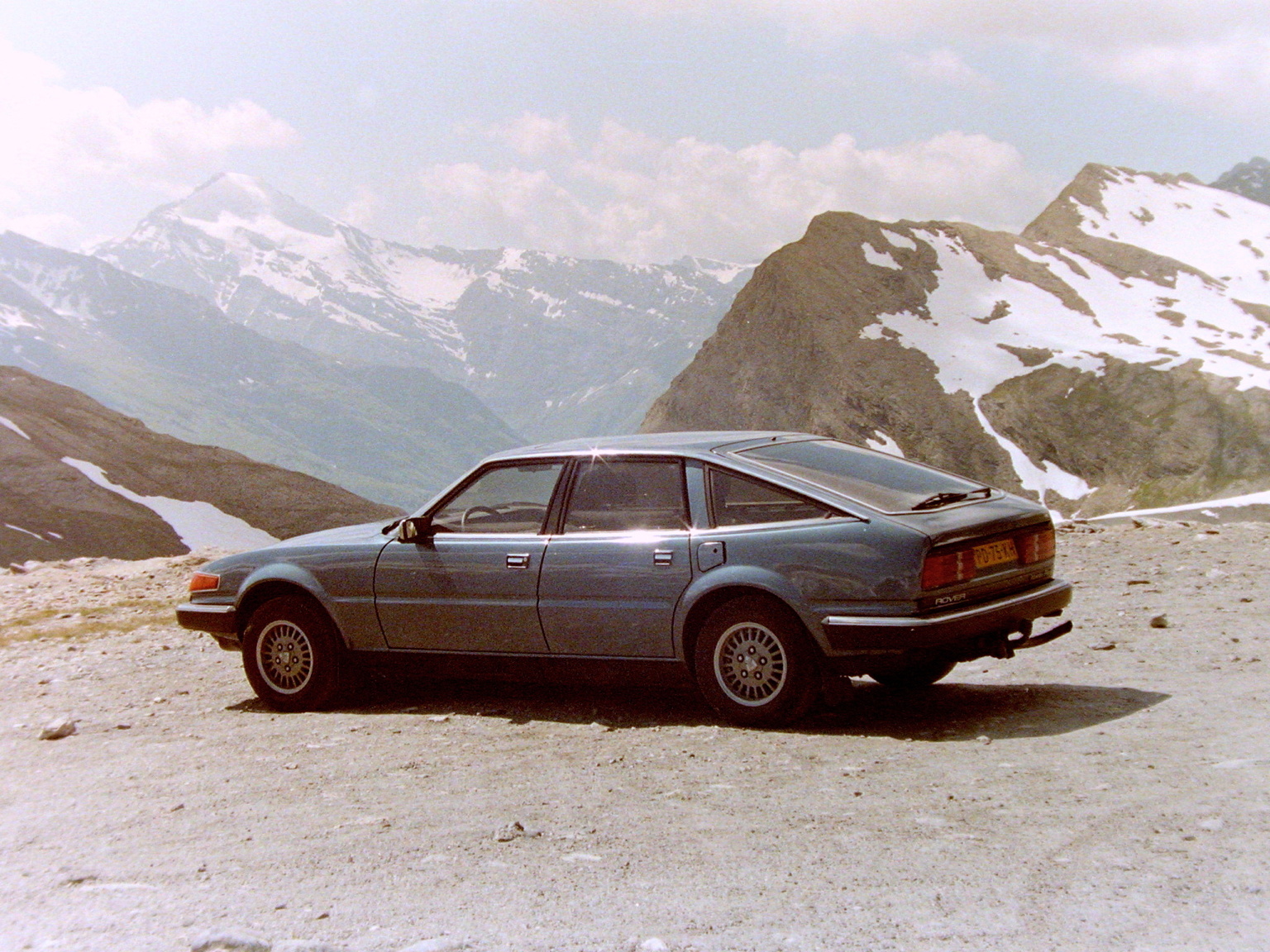
Our first car, the Rover 3500 Vanden Plas, July 2001 on the Col de l'Iseran. That's 2770 meter, not bad for this old English gentelman (or lady?). I still own it, with 383,000 km on the clock. All photos © Rens Swart, unless stated otherwise 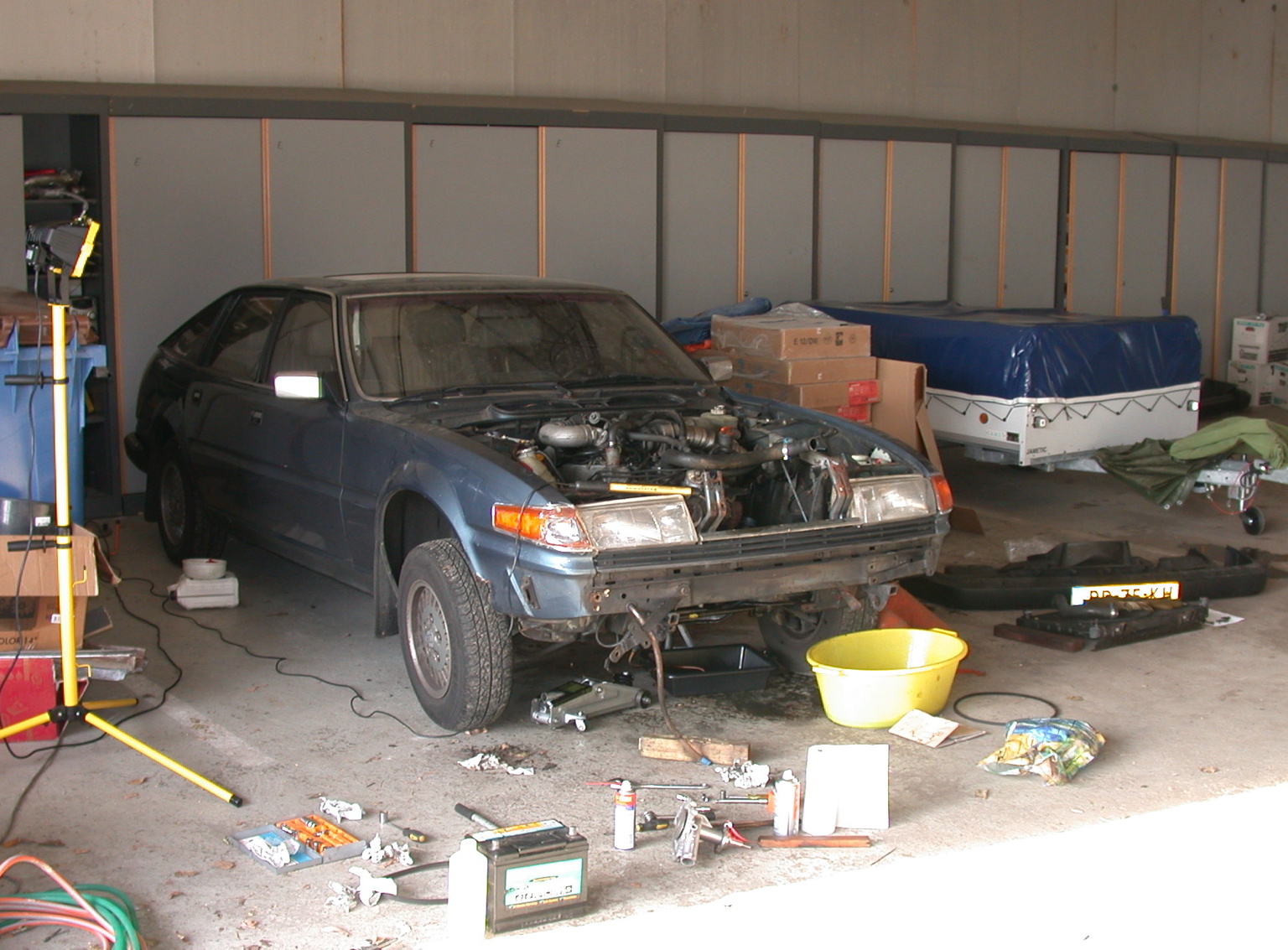
When I found a place in a former potato shed in 2008, I could work on the Rover SD1. 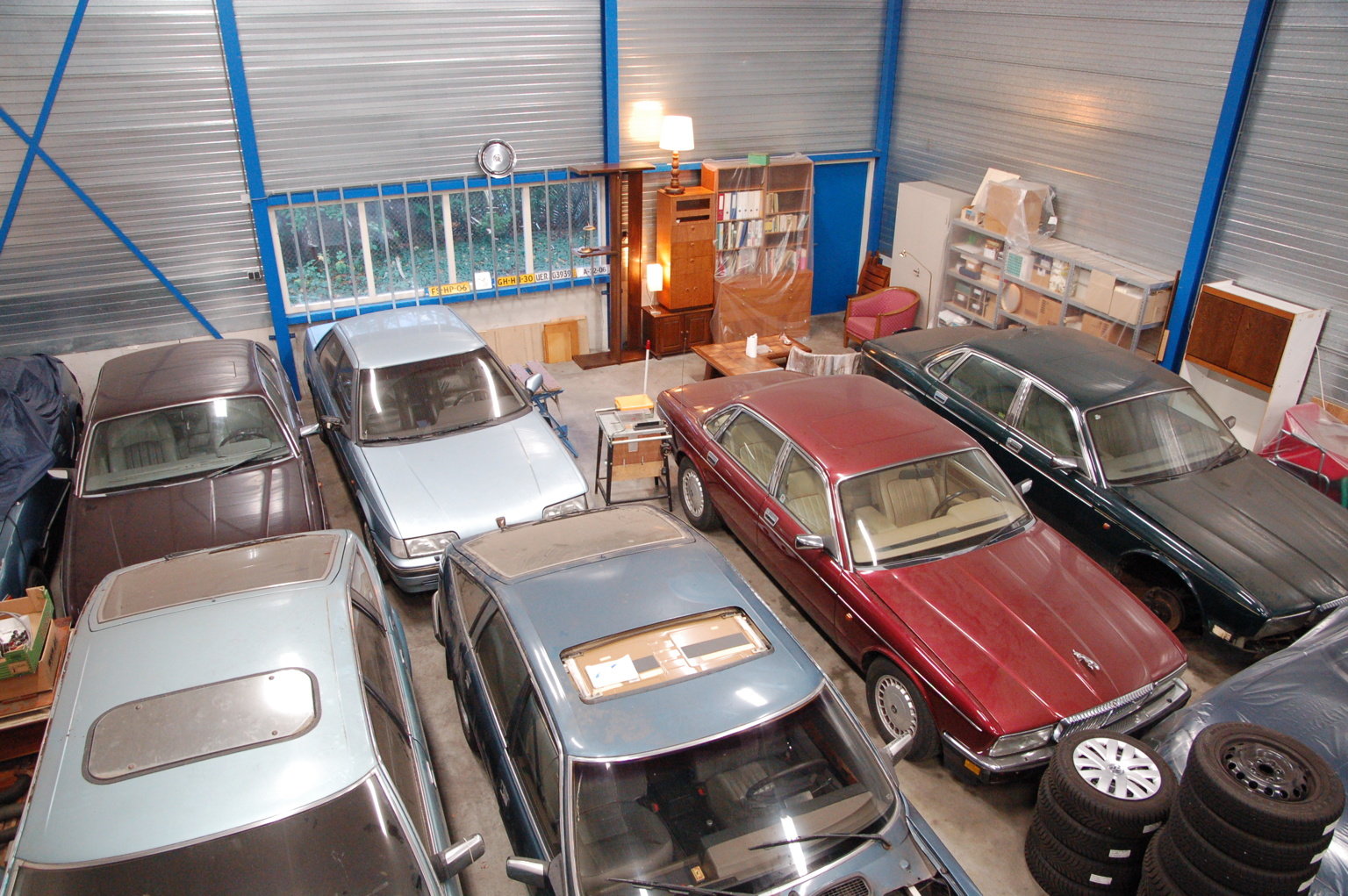
In the warehouse or business unit my companion and me acquired in 2012, there was enough room for the Daimlers (Jaguar XJ40 model) and Rovers (SD1 and 800) I had collected. In the corner some furniture and archives I could store after my parents passed away 
After several days of hard work, in the middle of the night I finished the job on the front suspension of my Daimler Double Six. This is what nowadays is called a selfie 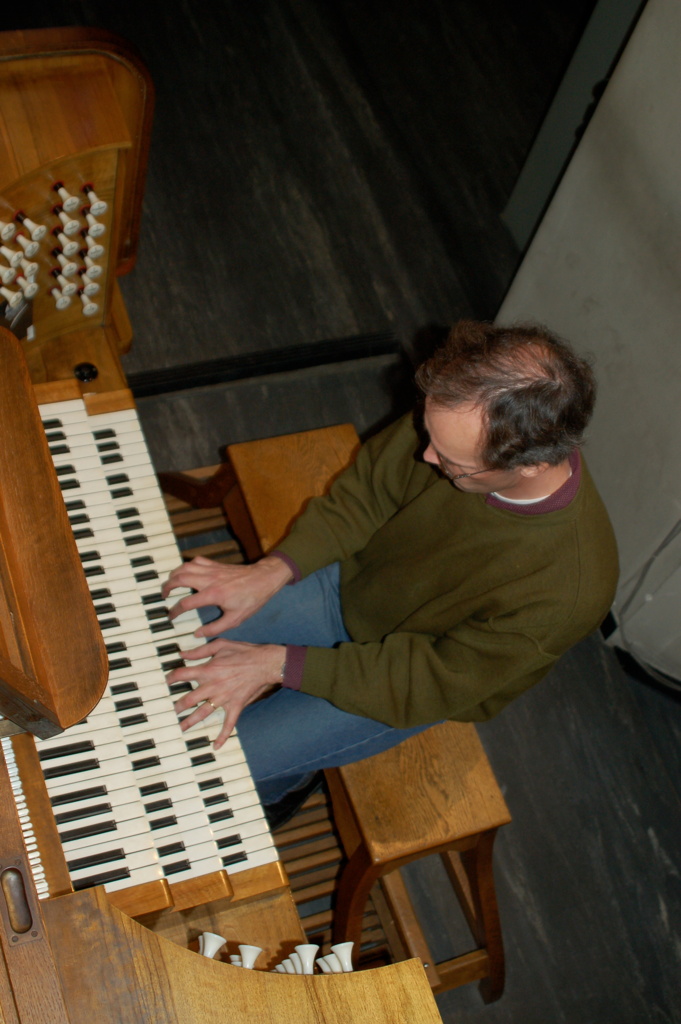
A organ I enjoyed playing for more than ten years: the Stevens-organ (1958) in the church of Our Lady of the Snows in Borgerhout (Antwerpen). Photo Johnny Verbeken 
At Orgelbouw Jos Stevens in Duffel (Belgium) I am busy with the cleaning and harmonisation of the short resonator reed stop Voix Humaine. A good hearing but above all a good physical insight and a kind of scientific attitude to keep asking what is caused by what make it a lot easier. 
We have built a mezzanine floor in the warehouse, almost doubling floor space. Organ parts are stored here on pallets, smaller pipes in crates and larger pipes are upright in pallet racks. It might look a bit like a mess, but it isn't: I know what is where and everything has been placed carefully. Part of this will be used for my own organ to be assembled. 
Smaller parts, wood, wooden pipes and consoles are stored in pallet racks. In the Cornelius Basilica they will be placed in the nave and the southern transept. 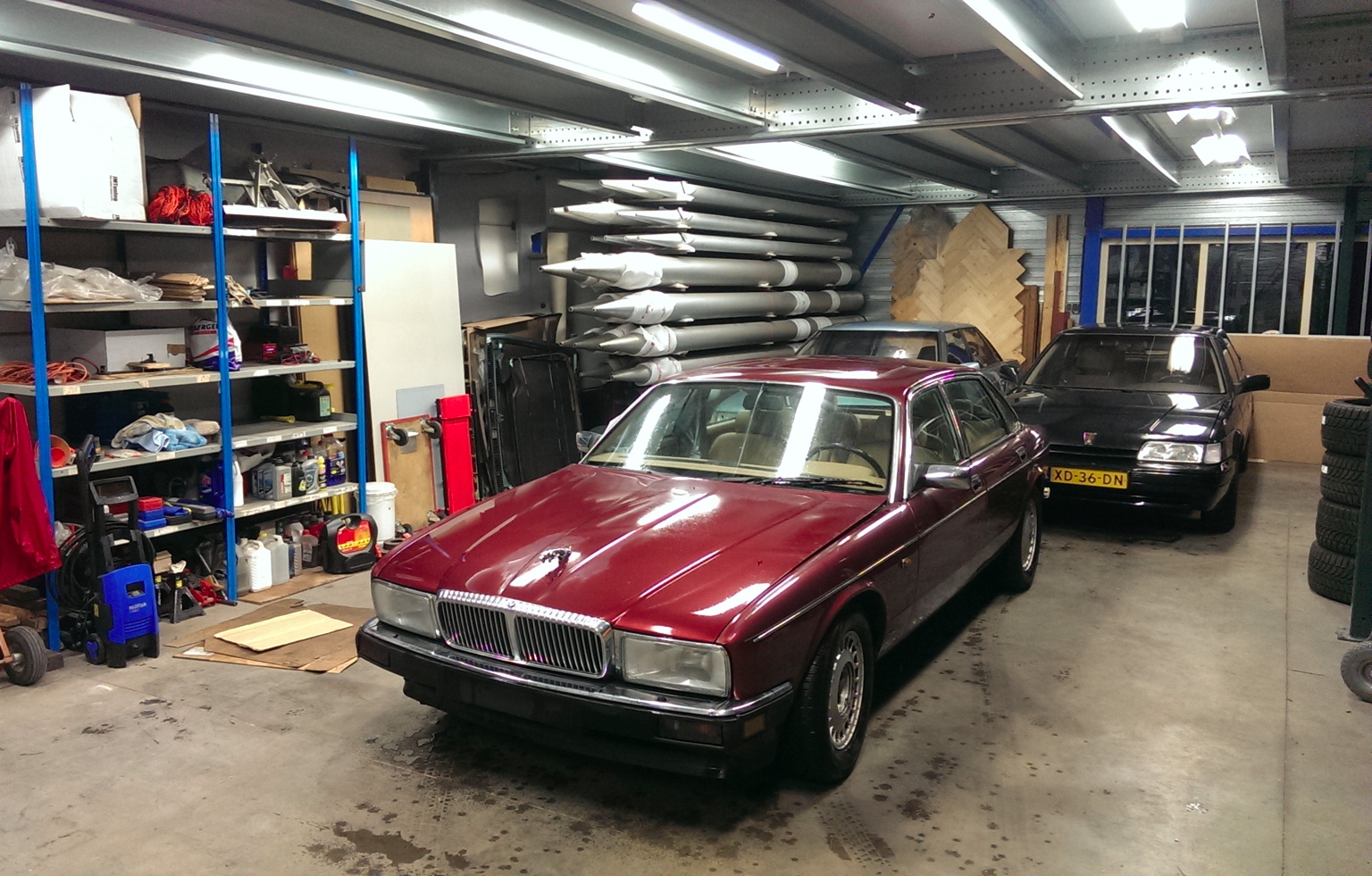
Now we have the mezzanine floor, the large 16 feet pipes must be stored horizontal. We also see a Daimler and Rover Vitesse before them and warehouse racks with tools and supplies. In one way or another this will be placed in the Cornelius Basilica. 
When the Petrus' Banden church in Son had to be closed because it would be demolished, nobody thought about the organ. I had to save as much as possible from this large Vermeulen instrument in only FOUR days. All 1,558 pipes were saved, although about 150 were sold to parishioners individually. About the only parts that we couldn't rescue were the (large and heavy) wind chests, the heart of the organ. The prospect pipes are 16 feet and will be the base for my own 'Laurentius organ' in de Cornelius Basilica 
The Cornelius church has a beautiful architecture and apse paintings. The fine brick vaults and arcs are nice and impressive. Here you can clearly see that the interior of the church is dominated by the brick vaults, which rise much higher than the aisles. This, together with the stained glass windows, makes the church very dark. With the current lighting installation, the vaults cannot be appreciated at all. 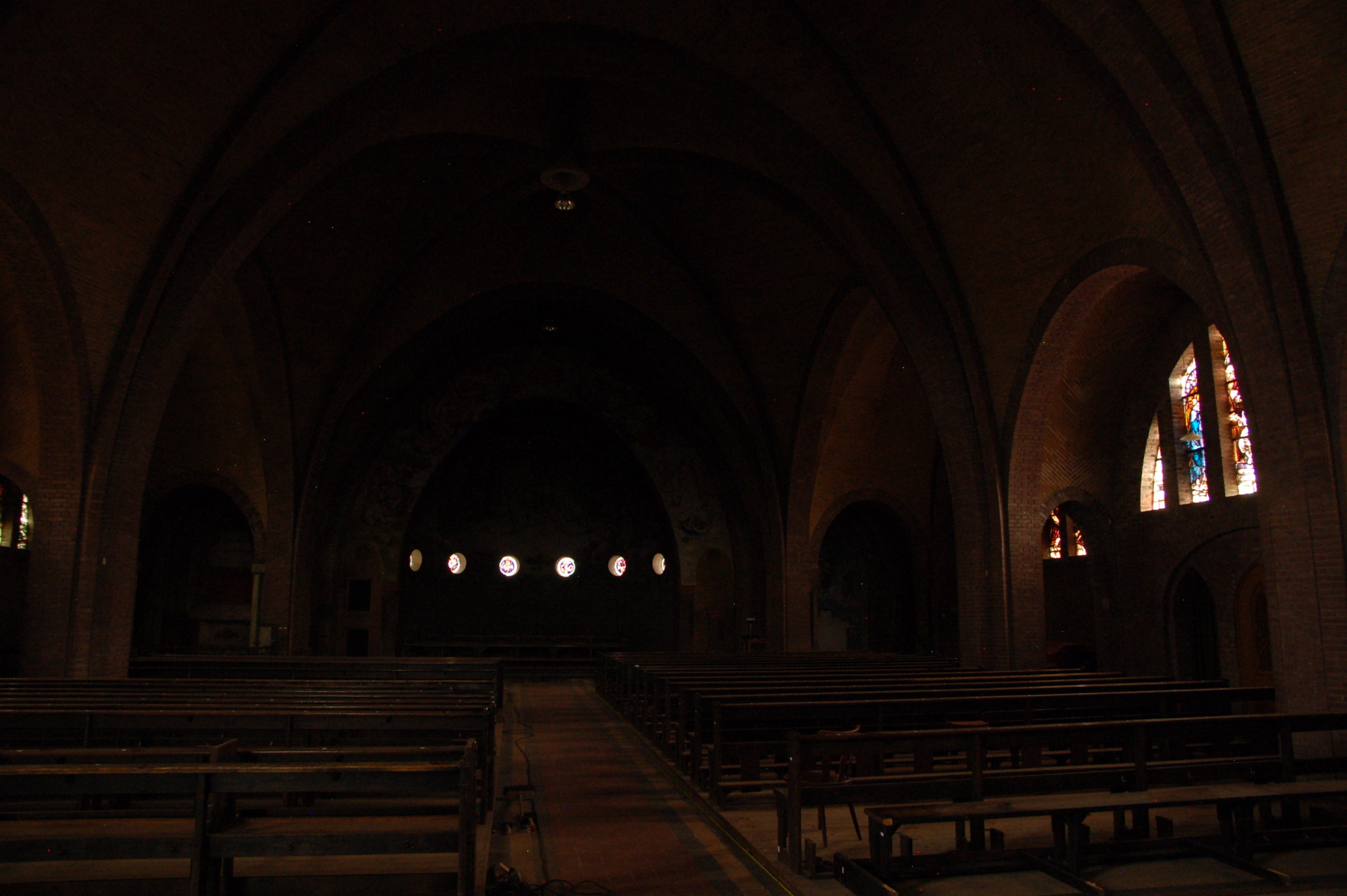
Most people know that the Cornelius Basilica is rather dark. But have you ever seen the church in the middle of the day with the lights off? You can hardly see anything. In the photo above I tried to catch the real light conditions. Your eyes really have to adapt to the darkness and even then it is very dark. 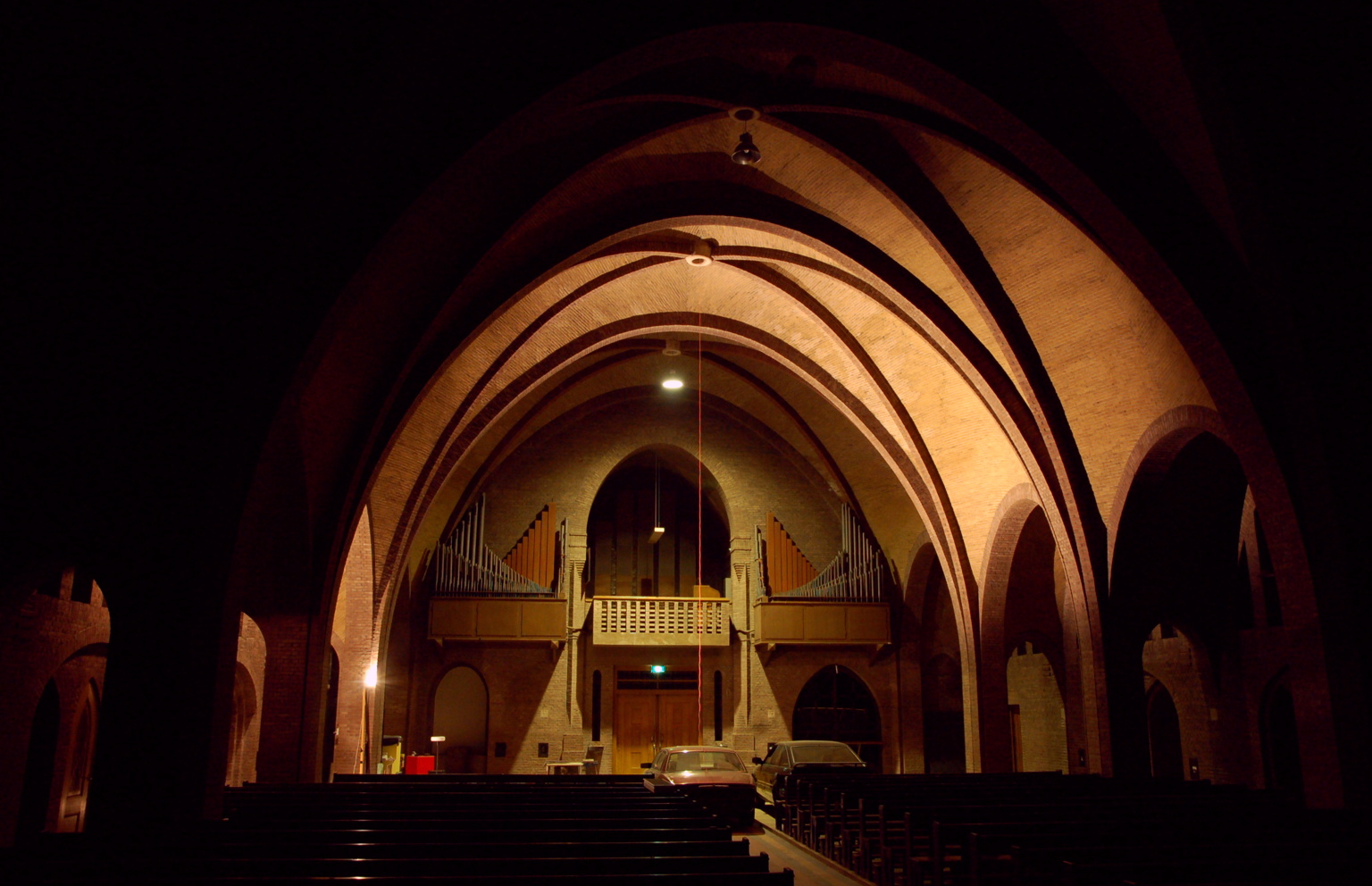
I am experimenting with LED spots to light the vaults from the side. The layout needs to be designed so that the effect is atmospheric. The vault lighting could even function as main lighting if not much light on the floor is needed. 
Although decommissioned, the hot air heating installation is in good condition, but very costly to operate. It needs about 40 cubic meter of natural gas per hour – you can almost see Groningen sink when you heat the church (sorry, not funny). I need to look into other options. 
These double baked tiles are part of the monument, but in bad shape. The concrete floor that saw daylight after I removed the wooden deck on which the pews stood, is rather rough, in particular on the edges. I would prefer completely changing it for a new reinforced concrete floor, preferably with floor heating and new tiles for the paths. What less costly options do I have? 
I reckon with the re-installation of the former Chapel of Our Lady of Welberg, for both religious and historical reasons, as the discussed Marian apparition to Janske Gorissen in Welberg took place here. Photo from the closing celebration on 15 November 2014 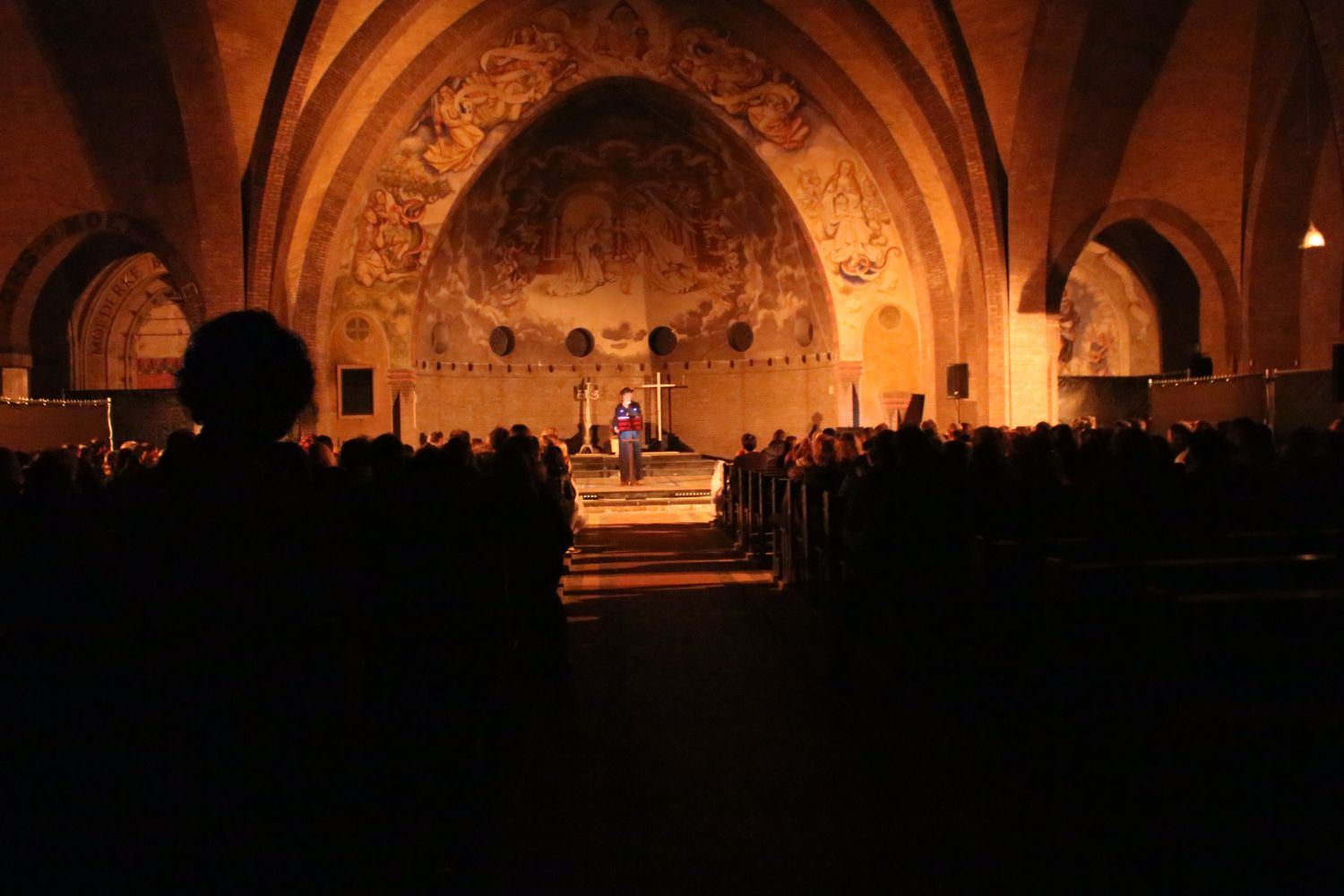
The Leisure for Welberg Association organised a Halloween theatre in the decommissioned building, before I owned it. Can I still accomodate activities like that in the church after I filled it with my stuff? Photo from a newspaper 
A few days after I became the owner of the Cornelius church, on 8 December 2019 the Christmas market took place, that was already organised by the Leisure for Welberg Association. |
 – what would the Cornelius church look like? How will I arrange stuff?
Kind regards,
Rens Swart